Tuesday, October 6, 2009

DAI 323- Week 6 Exercise


Movie posters are a great example of advertising being that their sole purpose is to entice you to see a particular film. One of the biggest parts of visual message- making lies within the arrangement of the elements and how they're perceived. Take the Aristocrats poster for example. This does not follow the syntactical guidelines for visual literacy well and ends up being a very poor design. The interaction within the design is very difficult to understand and makes the "attraction and grouping" difficult to see. It's basically a cluster of red and blue words that don't have any correlation until close examination. The color use also makes the design fairly confusing in terms of delivering the message. The red and blue are more prominent in the image, but one would think the name of the movie would need to be the first thing to be perceived. It looks like there's an attempt at visual stress by breaking up the red and blue type, but it would have been more effective if the black type that was interpolated in was larger. I think it would have given a better visual hint of repetition and what the movie is about.


A great example of movie poster following syntactical guidelines would be The Cooler. The message being communicated is very clear and direct. The stress on the title almost hints that life has its ups and downs before you get the girl. Most of the elements have some of skewed positioning (stress) like the snake-eyed dice, which has a long- standing connection with the idea of treachery and betrayal. The movie poster additionally has great use of positive and negative. The copy at the bottom doesn't interfere with the visual message being shown. It is very clear in its use of "attraction and grouping" as well. The use of red on the girl and dice show that those two things will be related in the movie. The over all look tells you that the movie will most likely be taking place in Las Vegas since it's neon and glowing.

Tuesday, September 29, 2009

DAI 323- Week 5 Exercise


Love it or hate it, graffiti in the most basic sense is visual communication dating back to cave paintings. Although some see it as vandalism, it always communicates with the viewer. Graffiti doesn't necessarily have direct meaning other than the graffiti writers name and their culture, but can be very in your face. Graffiti styles can be very specific to areas such as Sao Paulo's "Pixação" is only seen there and is distinctive and cryptic. Graffiti is meant to be temporary, not tucked away in a gallery as it is an attempt to take back public space, which has been overwhelmed with advertising. This specific form of graffiti in the image follows a common characteristic in the traditional graffiti style called "bombing." The letters that are unclear to many, but spell out "adek" and "mq" in a bubble letter form, two prolific San Francisco graffiti writers. This style of graffiti is usually very quick and generally uses one or two colors with a quick- solid fill for letters allowing for quick recognition. The idea behind this visual communication is to get their name out there as much as possible and in anyway.

Tuesday, September 22, 2009

DAI 323- Visual Thinking Research


In this puzzle we had to match up two of the designs, we both automatically knew there would be a subtle difference by how they looked or some sort of subtle change within the image like rotation. We both did a pattern recognition looking for a similarity between the two images and found the two patterns on the left were the same, but one was mirrored. essentially we compared the two images look for similarities in the pattern.


In this puzzle we had to find out how many squares there were. We both came up with the same answer of eleven. We both took our time to double- check that we didn't miss a square. I immediately recognized a pattern with the exclusion of one part so it was fairly easy to identify the squares. Alison did the same as myself, but it was done sub- conciously.

Tuesday, September 15, 2009

DAI 323- Feature Channels and Visual Search


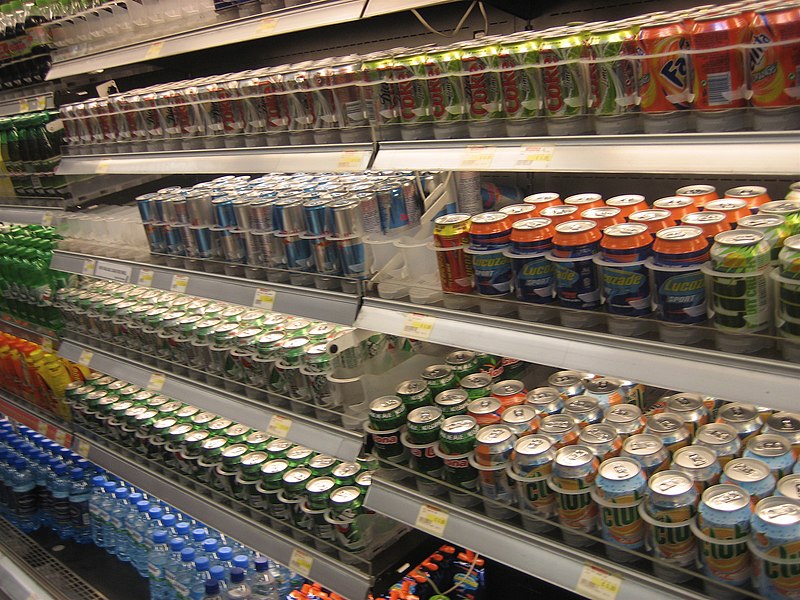
The visual search in this image is done entirely by the feature channels. This image of the beverage shelf in a supermarket really stresses the importance of the use of color and brightness in branding. The majority of the cans are similar in size, so the designers of the labels had to think what would make the brand "pop-out" amongst all the other companies. They needed to think about the subtle variations and how to direct the eye movement to their brand first in the visual hierarchy. Their main focus is to effectively use design so the visual searches are more rapid and efficient for their brand.

Tuesday, September 8, 2009

Top- Down Visual Processing

http://www.pep-web.org/document.php?id=psar.087.0591a.fig001.jpg

This optical illusion operates on our visual perception of contours. Depending on whether the black or white is seen, the brain will interpret whether two faces are shown or a vase. This is really the perfect example of constant linking and relinking of visual information in a top- down process. There is a very high level of attention for such a simple image as we try to grasp what is going on. This is an important image in terms of graphic design because it really relates to the efficiency of the design and how the information is translated. What t is essentially is goal- based eye movement through the image. It doesn't really matter what you originally see in the image, you will look it over again to see if your view was correct or if you missed something.